
Small Steps Forward: What Helps When ADHD Paralysis Takes Over
When you’re living with Attention‑Deficit/Hyperactivity Disorder (ADHD), that moment when you absolutely need to get something done, and yet you can’t even begin, is painfully familiar. It may look like laziness, but it’s neither willpower nor a character flaw. Instead, it’s often a form of ADHD paralysis, a symptom of executive dysfunction when your brain simply can’t prioritize or initiate the task in front of you.
In this article, we’ll gently walk you through:
What is ADHD paralysis, and how does it show up
Types of task paralysis, choice paralysis, and mental shut-down
Recognizing the symptoms of ADHD paralysis vs common procrastination
Strategies to get out of the freeze and move forward
If you’re ready to stop feeling frozen by the overload and start taking thoughtful, manageable steps toward clarity, keep reading.
What Is ADHD Paralysis? Understanding the Experience of Stuckness
If you’ve ever sat staring at a to-do list, knowing exactly what needs to get done but feeling completely unable to start, you’ve likely experienced ADHD paralysis. This isn’t a lack of motivation; it’s a form of mental paralysis that often comes with attention-deficit/hyperactivity disorder (ADHD) and is deeply connected to how the ADHD brain manages stress, focus, and decision-making.
According to the National Institute of Mental Health (NIMH), people with ADHD experience significant challenges with executive function, the brain’s ability to plan, prioritize tasks, and manage time effectively. When those systems are overloaded, the brain can simply shut down, leading to what’s often called task paralysis, decision paralysis, or analysis paralysis. In other words, when there’s too much pressure, too many choices, or too much sensory information, the mind freezes instead of moving forward.
This kind of ADHD mental paralysis isn’t laziness or avoidance. It’s a core symptom of adult ADHD, a response to overwhelm rather than defiance. Studies have shown that both children and adults diagnosed with ADHD often experience reduced activity in the brain regions responsible for motivation, organization, and impulse control.
ADHD paralysis isn’tprocrastination. Procrastination is often a choice; ADHD paralysis feels like the absence of choice, a moment when your executive dysfunction takes the wheel. With the right strategies to overcome this stuckness, often through therapy,mindfulness, or working with an ADHD coach, you can learn to manage the freeze response with compassion and create space for movement again.
How do I get unstuck from ADHD paralysis?
When you’re stuck in ADHD paralysis, start small. Pick one tiny step, like opening a notebook or sending a single message. Movement, connection, and compassion help more than pressure.
Why ADHD Paralysis Happens: Understanding the Brain Behind the Freeze
When you’re already doing your best and still can’t seem to get started, it’s easy to feel frustrated or defeated. But there’s a reason someone with ADHD can want to move forward and still feel completely frozen. It has less to do with willpower and more to do with how the ADHD brain responds to stress, emotion, and decision-making.
For many people living with ADHD, the freeze happens when too many thoughts, feelings, or options collide at once. Decision paralysis and executive dysfunction can create a mental bottleneck where the brain shuts down in self-protection.
ADHD Paralysis Symptoms:
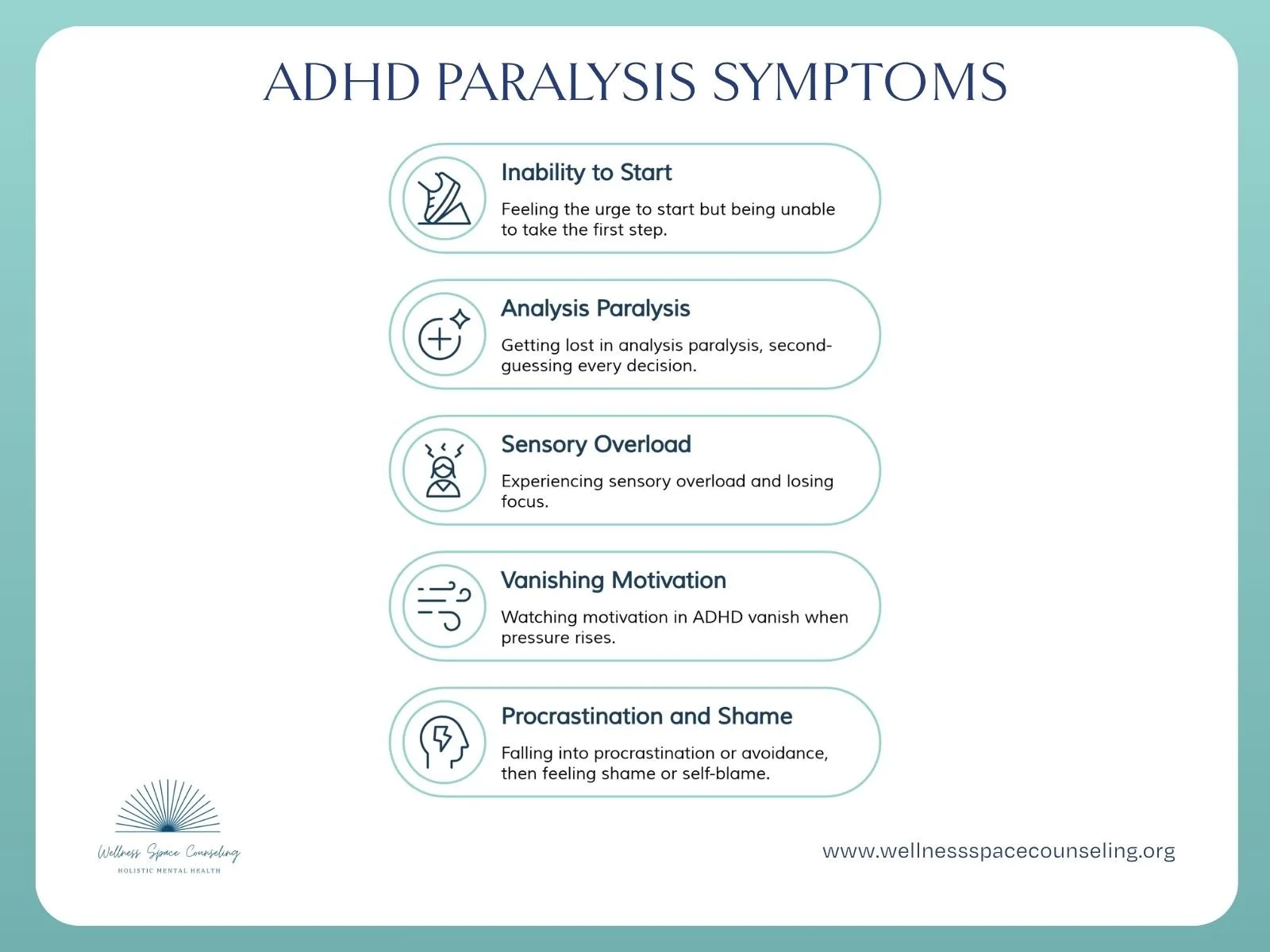
Feeling the urge to start but being unable to take the first step.
Getting lost in analysis paralysis, second-guessing every decision.
Experiencing sensory overload—too much sound, light, or input—and losing focus.
Watching motivation in ADHD vanish when pressure rises.
Falling into procrastination or avoidance, then feeling shame or self-blame.
If this sounds familiar, you’re not alone. ADHD paralysis symptoms are a normal, neurological response to overload. With time, self-understanding, and gentle structure, you can begin to manage ADHD paralysis and find steadier ways to move through those frozen moments.
The Different Types of ADHD Paralysis
Not every “stuck” moment looks the same. For people with attention-deficit/hyperactivity disorder (ADHD), paralysis can show up in different ways depending on what’s triggering the overwhelm: too many choices, strong emotions, or sheer exhaustion. Understanding the types of ADHD paralysis can help you recognize what’s really happening in the moment and choose the right kind of support instead of slipping into frustration or shame.
Here are some of the most common patterns people notice:
Task Paralysis
You want to start, but can’t seem to take that first step. Even simple things, like sending an email, folding laundry, can feel huge when your brain’s executive function systems are overloaded.
Decision Paralysis
You get caught in loops of analysis paralysis, worrying about making the wrong decision or trying to pick the “perfect” option. This type of freeze is often linked to ADHD paralysis and the brain’s struggle to prioritize effectively.
Emotional Paralysis
Intense emotions like fear, shame, or frustration take center stage, blocking your ability to act. This is a common aspect of ADHD known as emotional dysregulation, where feelings temporarily overpower focus or logic.
ADHD Shut Down
When stress or sensory overload hits a breaking point, your brain may hit pause completely. You might zone out, withdraw, or lose energy. It’s not avoidance; it’s your body trying to recover.
Recognizing which type you’re facing is the first step toward self-compassion. Each form of paralysis is simply your ADHD brain asking for a different kind of care—less pressure, more understanding, and smaller, doable steps forward.
What does an ADHD shutdown feel like?
An ADHD shutdown can feel like your brain has powered down. You might feel detached, numb, or unable to think clearly. It often happens after too much stress, emotion, or sensory input.
ADHD Paralysis vs. Executive Dysfunction: How They’re Connected but Not the Same
It’s easy to confuse ADHD paralysis and executive dysfunction, and for good reason; they’re closely linked. Think of executive dysfunction as the engine problem under the hood, and ADHD paralysis as the moment your car stalls.
Executive dysfunction refers to the brain-based challenges in planning, organizing, prioritizing, and following through, skills managed by the brain’s prefrontal cortex. These executive functions are often disrupted in ADHD, leading to struggles with time management, focus, and starting or switching between tasks.
ADHD paralysis, on the other hand, is what happens because of executive dysfunction; it’s the lived experience of freezing, feeling overwhelmed, and not knowing where to begin. This kind of paralysis is a common symptom of ADHD, often triggered by stress, sensory overload, or fear of making the wrong decision.
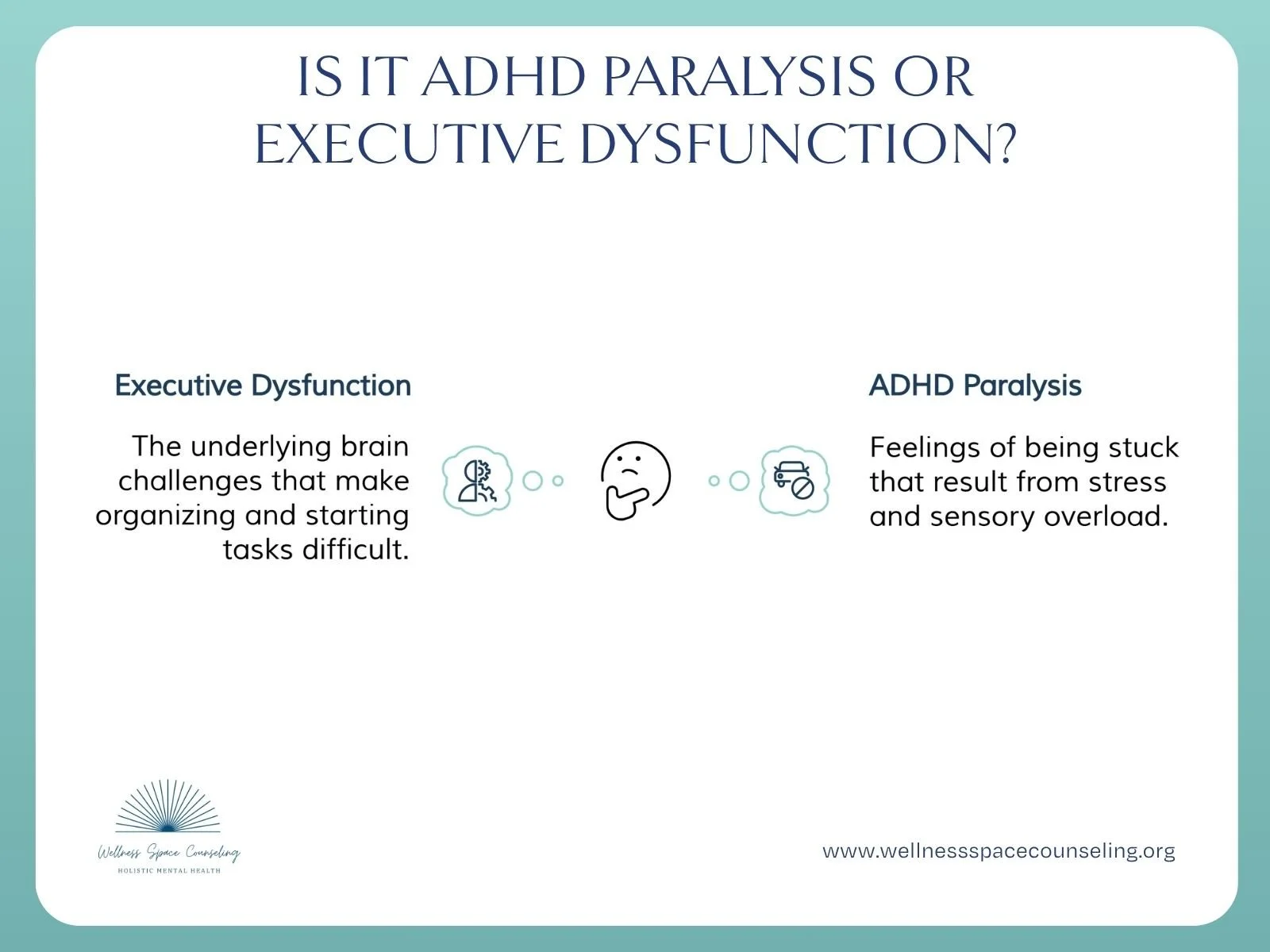
In short:
Executive dysfunction = the underlying brain process that makes organizing and starting tasks hard.
ADHD paralysis = the real-life “stuck” moment that results from that overload.
Understanding this difference helps you meet yourself with more compassion. You’re not lazy or broken; your brain just needs gentler structure and support to get back in motion.
ADHD Paralysis vs. Procrastination: It’s Not About Laziness
At first glance, ADHD paralysis can look like procrastination, but the difference runs much deeper. Procrastination is typically a choice to delay a task, while ADHD paralysis feels like you can’t start, no matter how much you want to.
Research published in The American Journal of Psychiatry. notes that individuals with ADHD experience higher rates of what’s known as avoidance-based delay, driven by emotional dysregulation and executive dysfunction rather than simple disinterest. When your brain hits overload, motivation drops, and the “freeze” response takes over.
Here’s how to tell the difference:
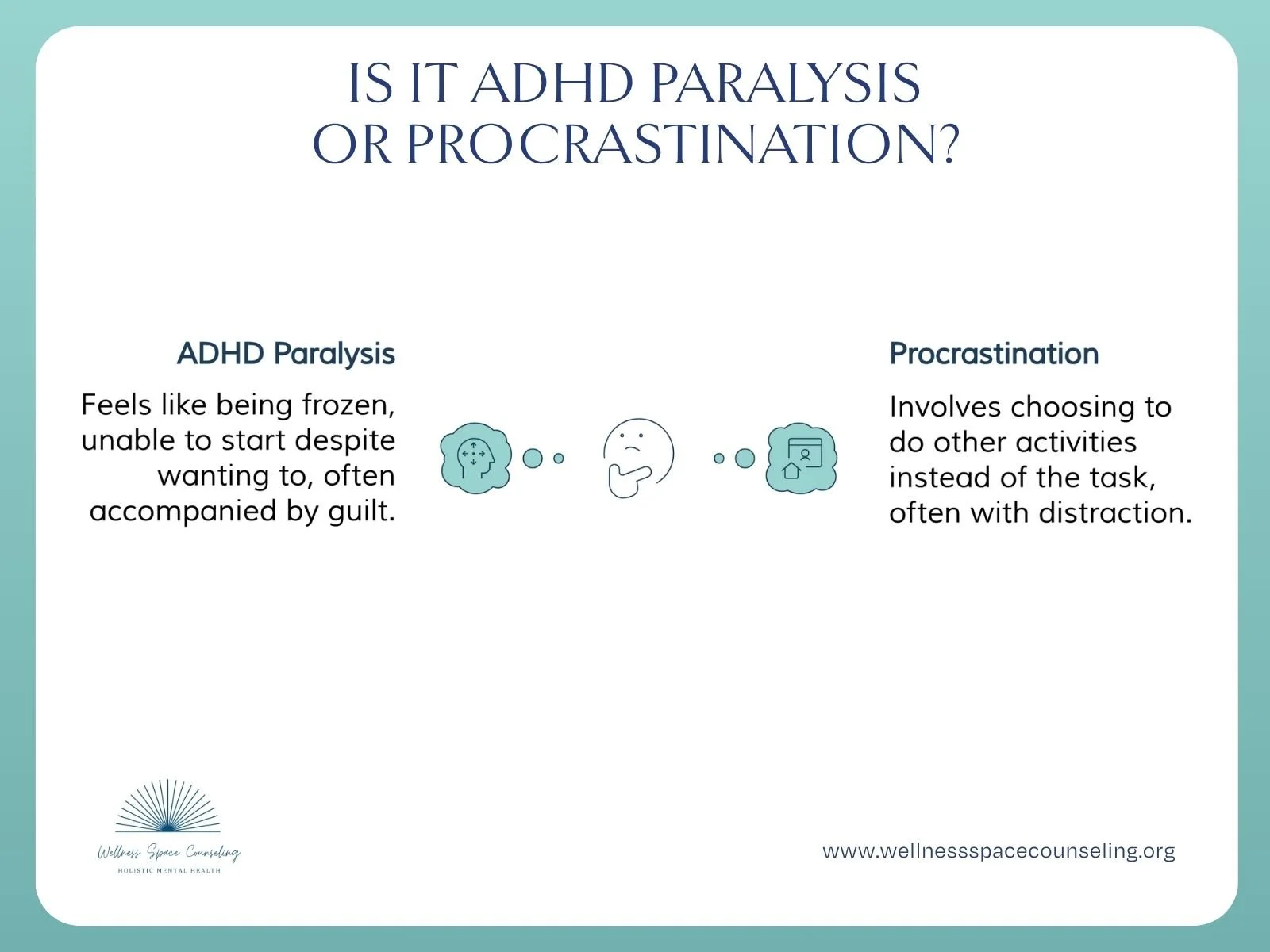
Procrastination often comes with distraction; you choose to scroll, clean, or do something else instead.
ADHD paralysis feels heavier, like you’re frozen in place, thinking about the task but unable to move.
People with ADHD may experience intense guilt afterward, even though the pause wasn’t intentional.
So if you feel overwhelmed, stuck, or unable to get started, remind yourself: this isn’t about willpower. ADHD task paralysis isn’t procrastination; it’s a moment of overload. With time, patience, and the right tools, it’s something you can learn to manage with understanding instead of shame.
How to Get Out of ADHD Paralysis
When you’re struggling with ADHD, feeling stuck can be one of the hardest experiences to explain. You might want to act, but can’t seem to move forward.
If you’re wondering how to overcome ADHD paralysis, these gentle steps can help you begin moving forward, without pressure or shame.

1. Start Small, Really Small
When ADHD paralysis takes over, even simple things feel impossible. Choose one task so small it almost feels too easy, like opening a notebook or responding to one short message. Breaking actions into micro-steps helps reduce avoidance and boost momentum, especially in people managing symptoms of attention deficit hyperactivity disorder.
2. Name What Feels Hard
Sometimes, naming your experience out loud, “I feel overwhelmed,” or “I’m afraid I’ll make a mistake”, helps calm the brain’s alarm system. Emotional acknowledgment is an important aspect of ADHD recovery because it eases internal tension that contributes to executive dysfunction and analysis paralysis.
3. Simplify Your Decisions
ADHD and decision paralysis often go hand in hand. Too many choices can flood the ADHD brain with stress and uncertainty. Try narrowing your options; choose between two instead of five. This reduces ADHD choice paralysis and helps you move through tasks with less overwhelm.
4. Use Your Body to Reset Your Brain
When attention-deficit/hyperactivity disorder overloads your mental circuits, physical movement can help you “unstick.” Take a short walk, stretch, or hold something grounding in your hands. The ADHD community often refers to this as a body-based strategy to gently re-engage the nervous system and restore focus.
5. Connect with Support
You don’t have to handle everything on your own. Whether it’s an ADHD coach, a therapist, or a trusted friend, accountability and understanding can make a big difference. Connection helps you see that you’re not alone in struggling with ADHD, and it supports long-term diagnosis and treatment planning.
6. Rest Without Guilt
Rest is not procrastination. For people associated with ADHD, rest allows the brain to recover from overstimulation and executive dysfunction. As experts in hyperactivity disorder note, adequate rest improves emotion regulation and focus, key ingredients for long-term success in managing symptoms of ADHD.
Overcoming ADHD paralysis doesn’t mean doing everything at once; it means taking one compassionate, sustainable step at a time. Each small effort helps rewire your brain toward balance and self-trust, reminding you that progress is possible, even when it comes slowly.
Do I have ADHD paralysis or am I just lazy?
If you care about what needs to be done but still can’t get started, that’s ADHD paralysis, not laziness. People who procrastinate by choice usually feel more in control, while those with ADHD paralysis often feel trapped and frustrated by their inability to act.
Finding Support for ADHD and Overwhelm — Let’s Take the Next Step Together
If you’ve been feeling stuck in ADHD paralysis, caught in analysis paralysis, or second-guessing every decision, you’re not alone, and you don’t have to figure it out by yourself.
In ADHD therapy, we’ll work gently and collaboratively to:
Understand how ADHD symptoms like task paralysis, time management struggles, or sensory overload show up in your daily life.
Explore how anxiety or depression might be adding to your stress or self-doubt.
Learn ways to calm your mind, improve ADHD focus, and move through indecision with more ease.
Build supportive, shame-free strategies that fit your rhythm and needs.
If you’re ready to take a small, supported step toward change, I’d love to help. You can schedule a consultation or reach out to learn more about my ADHD-focused therapy.
