
Disorganized Attachment Style: Making Sense of Mixed Signals
You might notice that relationships can feel both comforting and unsettling at the same time. One moment you’re craving closeness, and the next you feel the urge to pull back or protect yourself.
If that sounds familiar, you may be recognizing patterns often linked to a disorganized attachment style. This doesn’t mean anything is “wrong” with you. It often reflects earlier experiences in which connection felt unpredictable, leaving your mind and body unsure of how safe closeness really is.
In this article, we’ll explore:
What disorganized attachment is and how it develops
Common disorganized attachment style signs
How fearful-avoidant patterns show up in relationships
Steps toward a more stable, secure connection
If you’re trying to make sense of your relationship patterns, this is a place to start.

What Is Disorganized Attachment?
Disorganized attachment is one of the four main attachment styles in attachment theory. It is often also known as fearful-avoidant attachment because it combines both anxious and avoidant responses to closeness.
In simple terms, a disorganized attachment style means wanting connection while also feeling a strong pull to protect yourself from it. People with disorganized attachment may move toward closeness and then suddenly pull away. This push-pull dynamic can feel confusing in romantic relationships, friendships, and other close relationships.
This is not a personality flaw. It is an insecure attachment style that forms when the nervous system learns mixed signals about safety and connection.
Which attachment style is hardest to treat?
No attachment style is impossible to change. People with disorganized or fearful patterns may need more support. With time and support, more secure patterns can develop.
How Disorganized Attachment Style Can Form
Disorganized attachment style often develops in early relationships with a primary attachment figure. A child learns whether the world feels safe based on how caregivers respond. When caregiving is inconsistent, frightening, or unpredictable, a child may develop disorganized attachment.
This can happen when:
Caregivers are both comforting and a source of fear
There is childhood trauma or emotional unpredictability
Responses to distress are inconsistent
Emotional safety is unclear
A child may move toward the caregiver for safety but also feel the urge to avoid them. Over time, this creates an attachment pattern that feels conflicted.
Many people with avoidant attachment style are responding to patterns that once helped them cope. Understanding these patterns can help you move toward relationships that feel more secure and steady.
Disorganized Attachment Style Signs in Adults
Even when you understand the pattern, it can still be hard to recognize how a disorganized attachment style shows up in everyday life. Many adults notice these signs most clearly in close relationships, where emotions and expectations feel higher. These responses are often protective habits that formed over time. They are common for people with this attachment style and can shift with awareness and support.
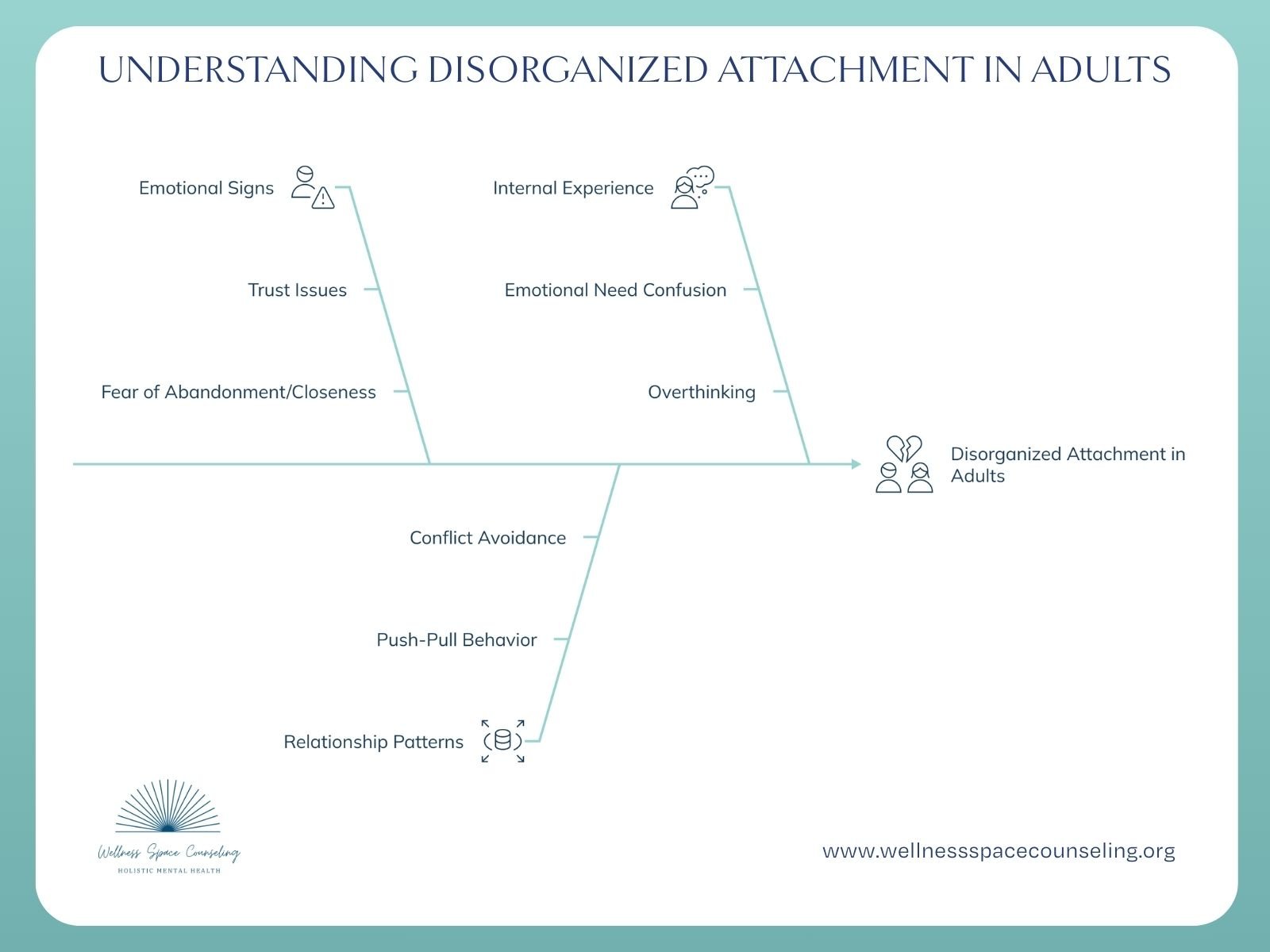
Emotional Signs
Common signs of disorganized attachment include:
Feeling unsure how to trust, even when someone is consistent
Fear of abandonment paired with fear of closeness
Suddenemotional shifts
Difficulty feeling safe or settled in caring relationships
Relationship Patterns
A person with a disorganized attachment style may:
Move toward closeness, then pull away
Test partners for reassurance
Shut down or feel overwhelmed during conflict
Want reassurance but struggle to take it in
Research shows insecure attachment patterns can increaseemotional reactivity and stress in relationships, but they can also change over time with supportive connection and therapy.
Internal Experience
You might also notice:
Confusion about emotional needs
Feeling “too much” or “not enough.”
Overthinking interactions
Difficulty regulating emotions
Recognizing these patterns is simply a step toward understanding how your attachment style may be affecting your relationships and emotional well-being.
Curious how your attachment style shows up in your relationships?
Download our free Attachment Style Quiz—a gentle self-reflection guide to help you understand your patterns and begin shifting them with more awareness and compassion.
How Disorganized Attachment Style Shows Up in Relationships
A disorganized attachment style in relationships can create patterns that feel confusing for you and for the people you’re close to.Research on adult attachment shows that attachment insecurity is linked to predictable “protective” strategies under stress, including pulling away, escalating, or misreading signals of safety.
Dating
What disorganized attachment looks like early on often includes a fast shift from connection to distance.
Common dating patterns:
Intense starts: Quick closeness, lots of chemistry, strong attachment feelings
Sudden withdrawal: After vulnerability or a “good” moment, you pull back to feel safe
Difficulty trusting consistency: You may scan for signs that something will change or disappear
Scenario: You have a great date, then feel the urge to cancel the next plan.
That push-pull response is common when your system learns that closeness can be unpredictable.
Long-term Partnerships
In long-term partnerships, disorganized attachment often shows up as cycles.
Common patterns:
Closeness → distance → closeness: You reach for connection, then feel overwhelmed and retreat
Conflict escalation: Disagreements can feel like a threat, not just a problem to solve
Fear of being hurt or left: Even small ruptures may trigger big emotional alarms
Communication Challenges
This is where many people feel stuck, because intentions and impact don’t always match.
Common communication struggles:
Mixed signals: Asking for closeness, then shutting down when it arrives
Difficulty expressing needs: Needs feel risky, so they come out indirectly
Misinterpreting reassurance: Reassurance can feel suspicious or “not enough,” even when it’s genuine
These patterns are not character flaws. They are attachment behaviors that often helped someone cope earlier in life, especially when attachment security was inconsistent.
Gentle Reflection
Try curiosity instead of blame:
“Do I pull away after moments of closeness?”
“Do relationships with people I care about feel intense or unpredictable?”
“When I withdraw or escalate, what am I trying to protect?”
Noticing the pattern is often the first step in shifting it.
Is disorganized attachment the same as fearful-avoidant attachment?
Yes. Disorganized attachment is also known as fearful-avoidant attachment. It’s one of the three insecure attachment styles within the four main attachment styles.
How Can I Heal Fearful-Avoidant / Disorganized Attachment
A disorganized attachment style can shift over time. Attachment often has “staying power,” but it isn’t permanent. Longitudinal research finds adult attachment is relatively stable yet also fluid, meaning real change can happen, especially after meaningful relationships and new support.
Researchers have also described earned secure attachment, where someone with early insecure attachment develops a more secure attachment style later in life.
Moving Toward Secure Attachment
A secure attachment style tends to grow through a few consistent ingredients:
Awareness: Noticing your attachment behaviors in adult relationships without shaming yourself
Emotional regulation: Learning to calm the nervous system when closeness feels “too much.”
Safe relationships: Spending time with people who are steady, respectful, and responsive
Consistency: Repeated experiences of repair and reliability, which support attachment security over time
What Helps If You’re Dealing with Disorganized Attachment
Healing disorganized attachment usually happens in small, repeated moments, not one big breakthrough.
What helps most often:
Therapy that focuses on attachment issues, trauma, and emotion regulation
Slowing reactions in conflict so you can respond instead of protecting
Building trust gradually through predictable contact and follow-through
Learning to tolerate closeness in small doses, especially after triggers
For couples, evidence reviews of Emotionally Focused Therapy report strong outcomes across trials, with many couples moving from distress to improved connection.
Small Steps You Can Try Now
If you’re someone with disorganized attachment, start here:
Notice triggers: “What just happened right before I shut down or got flooded?”
Name needs clearly: “I want closeness, and I also need to go slowly.”
Practice grounding: Longer exhale breathing, feet on the floor, a short walk before texting back
Communicate gently: “I’m feeling activated. Can we pause and come back in 20 minutes?”
Scenario check: If you feel the urge to pull away right after a good moment, try this: pause, name the fear, choose one small connecting action (a warm text, a clear plan, or a repair). That’s often how secure attachment develops—one steady step at a time.
Is disorganized attachment related to mental health conditions?
Disorganized attachment can affect mental health and relationships, but it isn’t a diagnosis. Early experiences and attachment patterns may shape how someone acts in relationships and responds to stress.
How Therapy Can Help With a Disorganized Attachment Style
Therapy can be a steady place to understand how a fearful-avoidant attachment style developed and how it continues to affect life and relationships. While disorganized attachment often begins in early caregiving experiences or trauma, many disorganized adults move toward more secure relationships with the right support.
Individual Therapy
Individual therapy helps someone with a disorganized attachment style understand how their attachment behaviors formed and how they show up in adult relationships.
Individual therapy can support:
Understanding patterns that developed in early relationships
Learning how attachment style or trauma may contribute to current reactions
Building nervous system regulation skills to manage overwhelm
Increasing emotional safety and self-trust
Noticing triggers and responding more intentionally
Studies on adult attachment and emotion regulation show that therapy focused on attachment and trauma can improve relationship functioning and emotional stability. Over time, secure attachment develops through repeated experiences of safety and consistency.
Couples Therapy
Couples therapy can be especially helpful when a disorganized attachment style affects romantic relationships. Someone with a disorganized attachment may find themselves wanting closeness but reacting strongly when emotions feel intense. This push-pull dynamic can create confusion for both partners.
Couples therapy can help with:
Repairing trust after conflict or distance
Improving communication and emotional expression
Understanding how attachment behaviors affect the relationship
Creating more predictable and secure interactions
Building stability through consistent connection
For people with a disorganized attachment style, therapy offers a place to explore how early experiences may have shaped current reactions and to practice new ways of relating. Over time, many people find they can build more secure relationships and feel more stable in close connections.
Support for Building a More Secure Connection
At Wellness Space Counseling, we offer calm, structured support focused on clarity and emotional safety. Our team works with individuals and couples who want to better understand attachment patterns and feel more secure in their relationships.
In couples counseling, we use the Gottman Method to help partners rebuild trust, improve communication, and navigate conflict with practical, evidence-based tools. We also draw from Emotionally Focused Therapy to explore attachment patterns, create emotional safety, and strengthen connection over time.
If this resonates, you’re welcome to reach out. We’re here when you feel ready, with no pressure and a steady place to start.
