
What Is Ketamine Assisted Psychotherapy? A KAP Therapy Overview
You've tried therapy. Maybe medication too. And still, something feels stuck. The weight doesn't lift, the patterns don't change, and the relief you hoped for still doesn’t come.
That's not a personal failure. That's a pattern we see constantly. And there may be a reason traditional approaches haven't been enough. Ketamine-assisted psychotherapy (KAP) is an innovative treatment approach that combines the therapeutic properties of ketamine with skilled, trauma-informed psychotherapy to create space for deeper healing.
In this overview, we cover everything you need to know about KAP, including:
What ketamine-assisted psychotherapy is and how it works
The mental health conditions KAP can help treat
How a typical KAP session is structured
The benefits of ketamine-assisted psychotherapy
How KAP differs from traditional therapy
What to expect when starting ketamine therapy
Ready to explore whether KAP could be right for you? Book a free consultation with our team.
What Is Ketamine Assisted Psychotherapy?
Ketamine-assisted psychotherapy (KAP) is a mental health treatment that uses a therapeutic dose of ketamine alongside psychotherapy to support healing. Rather than using the drug ketamine in isolation, KAP integrates it within an intentional therapeutic framework, so the experience is held, guided, and processed with clinical care.
Ketamine is a legal, FDA-approved anesthetic that has been used safely in medical settings since the 1970s. Ketamine has been safely used in medical settings for decades. In recent years, research has explored its potential to support mental health treatment by creating a temporary period of increased flexibility and openness in the brain. When paired with psychotherapy, this window can support deeper emotional processing and meaningful therapeutic work.
How KAP Therapy Differs from Standard Ketamine Treatment
Medication-only ketamine treatment focuses primarily on the effects of the medication itself. Ketamine-assisted psychotherapy goes a step further by combining ketamine with intentional therapeutic support before, during, and after the experience.
Preparation sessions help establish goals and create a foundation for the work. The ketamine experience may provide increased emotional openness, flexibility, and self-reflection. Integration sessions help clients make meaning of the experience and apply insights to everyday life.
Think of it this way: ketamine may open a door. Therapy helps you walk through it with intention and support.
Wondering if KAP could help you? Our team at Wellness Space Counseling offers a free 20-minute consultation to talk through your situation and answer your questions.
Is ketamine-assisted psychotherapy legal?
Yes, ketamine-assisted psychotherapy can be legal when provided by properly licensed medical professionals. Ketamine is FDA-approved as an anesthetic, but its use for mental health treatment is considered “off-label,” which is a common legal medical practice when appropriately prescribed and monitored.
The Science Behind Ketamine Assisted Therapy
Ketamine works partly by blocking NMDA receptors in the brain, which can influence glutamate signaling and may help shift patterns associated with depression and some trauma-related symptoms. This mechanism is fundamentally different from how traditional antidepressants work, which is part of why ketamine can help when other approaches haven't.
How the Drug Ketamine Supports Healing at a Brain Level
One thing we share with clients that often surprises them is how specific these brain changes actually are. Ketamine can produce a rapid increase in neuroplasticity, essentially creating a short window where the brain is more flexible and receptive to change.
This is why the psychotherapy component matters so much. That window of neuroplasticity is exactly when therapeutic work can reach deeper thought patterns and behaviors that have otherwise felt immovable.
A 2025 study available through PubMed Central describes KAP as combining the rapid neuroplasticity induced by ketamine with the cognitive and emotional restructuring facilitated by psychotherapy, calling it a novel paradigm in mental health treatment.
The Role of a Non-Ordinary State of Consciousness
At therapeutic doses, ketamine can create a dissociative, non-ordinary state of consciousness. This isn't disorienting in the way people sometimes fear. Many clients describe it as a loosening, a feeling of emotional spaciousness that allows them to access and process difficult emotions with less resistance.
The experience of KAP varies from person to person. Some describe vivid imagery. Others experience a quieting of anxious thought loops. What most share is a sense of distance from habitual mental patterns, which creates room for something new.
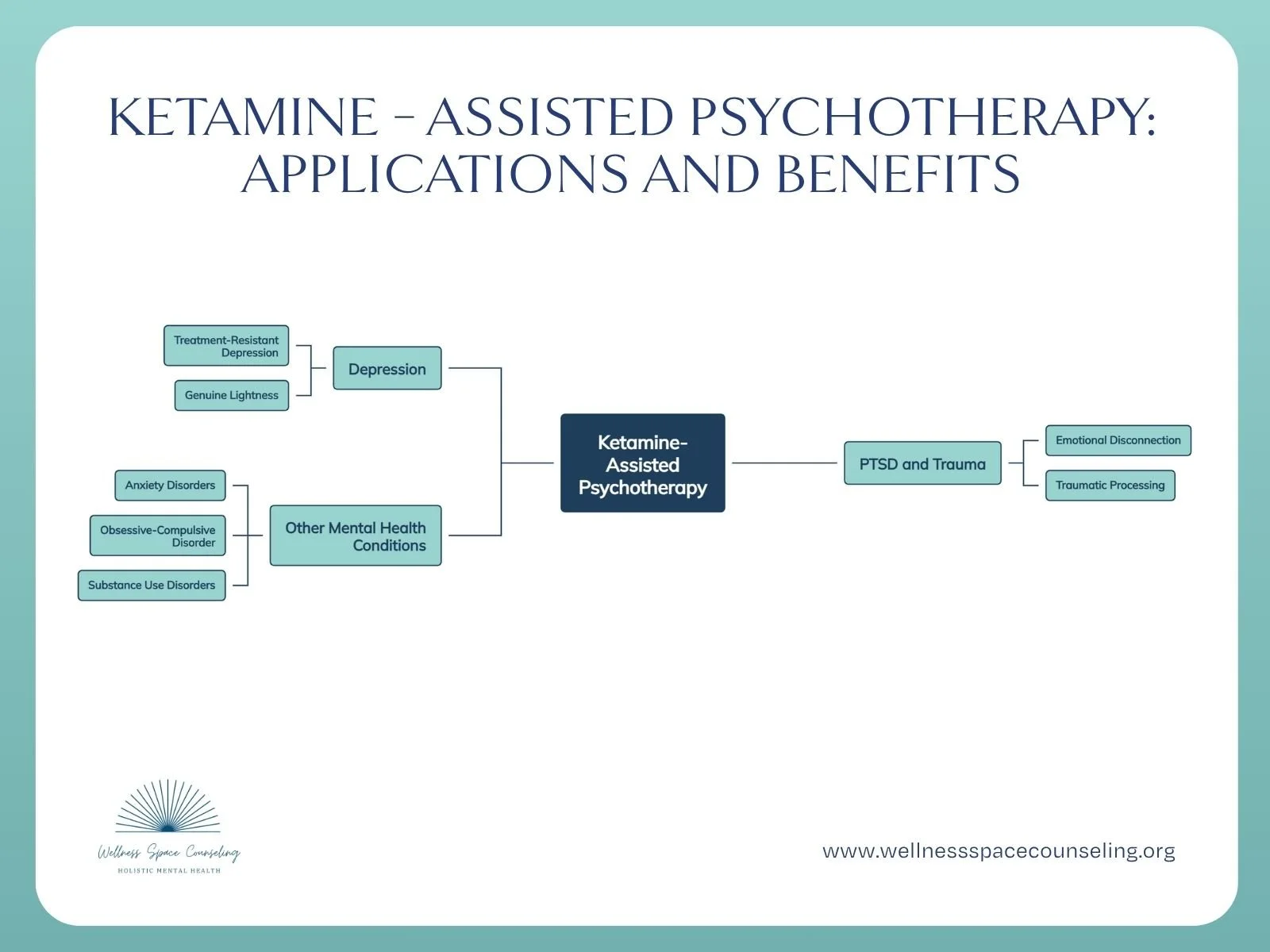
Mental Health Conditions Ketamine Psychotherapy Can Help Treat
KAP therapy shows the most promise for mental health conditions that have not responded fully to traditional treatments. A 2022 systematic review published in PMC, cited over 158 times, identified ketamine-assisted psychotherapy as showing meaningful potential across a range of mental health disorders.
Ketamine-Assisted Psychotherapy for Depression
Individuals struggling with depression, particularly treatment-resistant depression, are among those who benefit most from KAP. Depression symptoms that have persisted through multiple antidepressant trials or talk therapy approaches often respond to the different mechanism that ketamine offers.
What we see in clinical settings confirms this. Clients who have spent years managing depression symptoms with limited relief sometimes describe their first KAP experience as the first time they felt genuine lightness.
KAP for PTSD and Trauma
Post-traumatic stress disorder (PTSD) is one of the most researched applications of ketamine therapy. A 2025 University of Florida study found that ketamine may help people with PTSD disconnect from overwhelming emotional responses and better process traumatic experiences. The National Institute of Mental Health estimates lifetime PTSD prevalence among U.S. adults at 6.8%.
For many struggling with PTSD, the altered state ketamine produces allows access to traumatic material without the full emotional flooding that can make processing so difficult in traditional therapy sessions.
What are the side effects and safety considerations of ketamine-assisted psychotherapy?
Common side effects can include dizziness, nausea, sleepiness, dissociation, anxiety, or temporary increases in blood pressure. Ketamine-assisted psychotherapy should always be provided by trained professionals with proper medical screening, monitoring, and aftercare.
Ketamine Therapy and Other Mental Health Conditions
KAP is also being used to treat mental health conditions, including anxiety disorders, obsessive-compulsive disorder, and substance use disorders. Evidence supports its use across a wider range of mental health challenges than many people realize.
Adults dealing with persistent mood symptoms, emotional stagnation, or mental health symptoms that haven't responded to traditional forms of therapy may find KAP a meaningful alternative to traditional talk therapy.
Preparation, Dosing, and Integration: What to Expect
Understanding what the ketamine-assisted psychotherapy process actually looks like can make a meaningful difference when someone is considering whether to move forward. It's not a single appointment. It's a structured sequence designed to make the experience safe, purposeful, and lasting.
Preparation Sessions
Before any ketamine administration, clients meet with their KAP therapist for preparation sessions. These conversations build safety, establish therapeutic goals, and equip clients with grounding tools to use during the ketamine experience.
This is where trust is built. We want clients to feel genuinely held before they ever receive ketamine. The preparation work shapes the quality of everything that follows.
The Ketamine Session
Ketamine administration varies by provider and clinical context. Routes of administration include oral ketamine lozenges (collaboration with medical prescribing partners), ketamine-assisted psychotherapy (KAP), oral lozenges (troches), or preparation, dosing support, integration (trauma-informed, therapist-guided treatment). The prescribing physician determines the appropriate dose of ketamine based on screening and clinical history.
During the dosing session, the client rests in a supported, comfortable setting. A therapist or trained KAP therapist is present throughout, holding space and providing grounding if needed. The experience of KAP at this stage typically lasts 45 to 90 minutes.
Integration Sessions
The integration session that follows may be the most important part of the entire process. This is where the insights, images, and emotional material from the ketamine experience are brought into therapeutic conversation.
Integration therapy is what transforms a ketamine experience into lasting change. Without the support of psychotherapy, those insights can fade. With it, they become the foundation for new thought patterns and behaviors.
Is KAP covered by insurance?
Coverage for ketamine treatment varies. KAP is not yet consistently covered by insurance, though some portions of treatment may be eligible for out-of-network reimbursement depending on your plan. Our team can help you understand your options and discuss payment considerations during a free consultation.
Benefits of Ketamine Assisted Therapy
The benefits of ketamine-assisted therapy go beyond symptom relief. Many clients describe changes that feel qualitatively different from what they experienced through traditional therapy or medication alone.
Rapid Relief from Mental Health Symptoms
One of the most cited benefits of ketamine is the speed of its effects. Unlike antidepressants that can take 4 to 6 weeks to produce results, ketamine can produce relief from depression symptoms within hours or days. This rapid onset matters deeply for people who are struggling with depression, especially those who feel they've exhausted other options.
That said, we're careful not to frame KAP as a quick fix. The speed of initial relief is valuable, but what creates real change is the combination of that relief with meaningful therapeutic work during the integration phase.
Access to Difficult Emotional Material
For clients who have spent years talking about pain without actually moving through it, the altered state ketamine can produce is genuinely different. The effects of ketamine create a kind of emotional distance that allows people to access and process difficult emotions without being overwhelmed by them.
This is particularly meaningful for those dealing with trauma. The approach to mental health that KAP offers isn't about bypassing the hard work. It's about creating conditions where that work finally becomes possible.
Long-Term Shifts in Thought Patterns
Clients often report that the benefits of ketamine extend well beyond the sessions themselves. They describe a softening of rigid thought patterns and behaviors, a greater capacity for emotional regulation, and a renewed sense of agency over their own healing.
Increased psychological flexibility: Thought patterns that once felt fixed often become more workable after KAP.
Reduced emotional reactivity: Mental health challenges often feel less consuming after a course of ketamine therapy.
Deeper therapeutic progress: Integration therapy helps clients apply insights to daily life in lasting ways.
Greater self-compassion: Many clients emerge from KAP with a noticeably gentler relationship with themselves.
KAP vs. Traditional Forms of Therapy
Ketamine-assisted psychotherapy is not a replacement for traditional therapy. It is an alternative to traditional talk therapy for people whose mental health conditions have not responded fully to traditional treatments, or an approach that can deepen and accelerate work that is already underway.
What Makes KAP Different
Traditional forms of therapy primarily work through insight, language, and relational experience. Those tools are powerful. But they depend on the client being able to access emotional material through conversation. For some people, especially those with deeply entrenched patterns or significant trauma, that access is limited.
KAP offers an experiential pathway. The therapeutic effects of ketamine create a non-ordinary state of consciousness where the usual defenses are temporarily relaxed, making it a genuine alternative to traditional talk therapy for those who haven't found relief elsewhere.
See if Ketamine-Assisted Psychotherapy Is Right for You
We understand that considering KAP therapy can bring up a lot of questions, and some hesitation too. That makes complete sense. Reaching out when you've already tried so many things takes courage, and we don't take that lightly.
At Wellness Space Counseling, we offer Ketamine-Assisted Psychotherapy as part of a comprehensive, evidence-based approach to mental health care. Our team of licensed therapists works collaboratively with trusted medical providers to ensure every step of the KAP process, from preparation through integration, is held with care, clinical rigor, and deep respect for each client's individual journey.
At Wellness Space Counseling, we focus on the psychotherapy component of KAP while collaborating with trusted medical providers who prescribe and oversee the ketamine portion of treatment. Our role is to help clients prepare for the experience, provide therapeutic support during the session, and integrate insights afterward so meaningful change can continue beyond the dosing day.
Ketamine may help create openness and flexibility. Therapy helps transform those experiences into lasting growth.
KAP is not the right fit for everyone. But for those struggling with trauma, anxiety, low mood, emotional stuckness, or patterns that have not responded fully to traditional treatment, it may offer a different path forward. We are committed to helping clients explore whether this approach aligns with their goals in a thoughtful, honest, and supportive way.
KAP isn't right for everyone. But for those struggling with depression, PTSD, or symptoms that haven't responded to traditional treatment, it may be the next meaningful step. We'll help you figure that out together, honestly and without pressure.
If any of what you read today resonated, we'd love to hear from you. Reach out to schedule a free 20-minute consultation, and let's figure out together what healing could look like for you.
